How Trauma Heals
May 29, 2025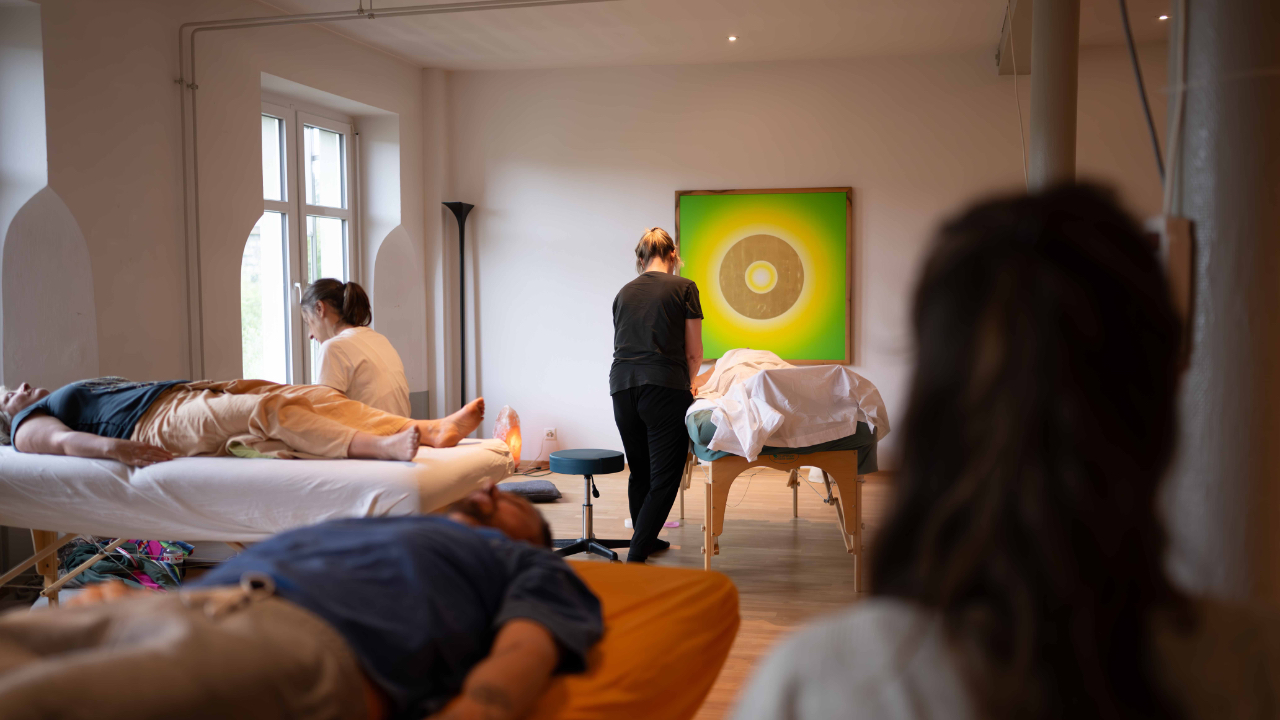
Touching the Pain – How Trauma Heals
Why touch heals
Trauma is not the exception but part of our humanity. Every human being carries wounds – visible or invisible – that manifest in the body, in thinking and in behavior. And yet healing is not just about "fixing something". It is about finding yourself again in a space where what is tight is allowed to expand. Where pain is not analyzed but touched. Inwardly and outwardly.
We call it "Touching the Pain". And that means: entering into relationship with what closes itself off the most. And allowing something there that is greater than our thinking – presence, awareness and real touch.
Trauma is tightness – in the body, in thinking, in acting
Trauma is not just what happened. It is what remains in the body and nervous system when we were unable to process an overwhelming event.
Typical signs of traumatic imprints:
- Physical: tension, pain, numbness, restricted breathing
- Mental: circling thoughts, self-criticism, narrow thinking
- Behavior: withdrawal, repeating patterns, control
This tightness is the "protective armor" our system has built. But what was once a survival reflex later becomes a prison.
🧠 Scientific background:
Trauma has been shown to change the functioning of the nervous system (cf. Porges' polyvagal theory), especially the ability of the ventral vagus nerve to create social connection and safety. The body stays in a constant state of alert – even when the real danger is long gone.
Healing begins with feeling – but not with the mind
The first step in our work is never cognitive understanding. It is the question: Do you feel it?
If a person doesn't feel something, no real processing is possible. Feeling means being able to stay present without fleeing. It means being present with the tightness, the pain, the numbness. And this is exactly where the opening begins.
"If you don't feel the pain, I can't do anything. When you touch it – inside as well as outside – something begins to move."
Why we need touch
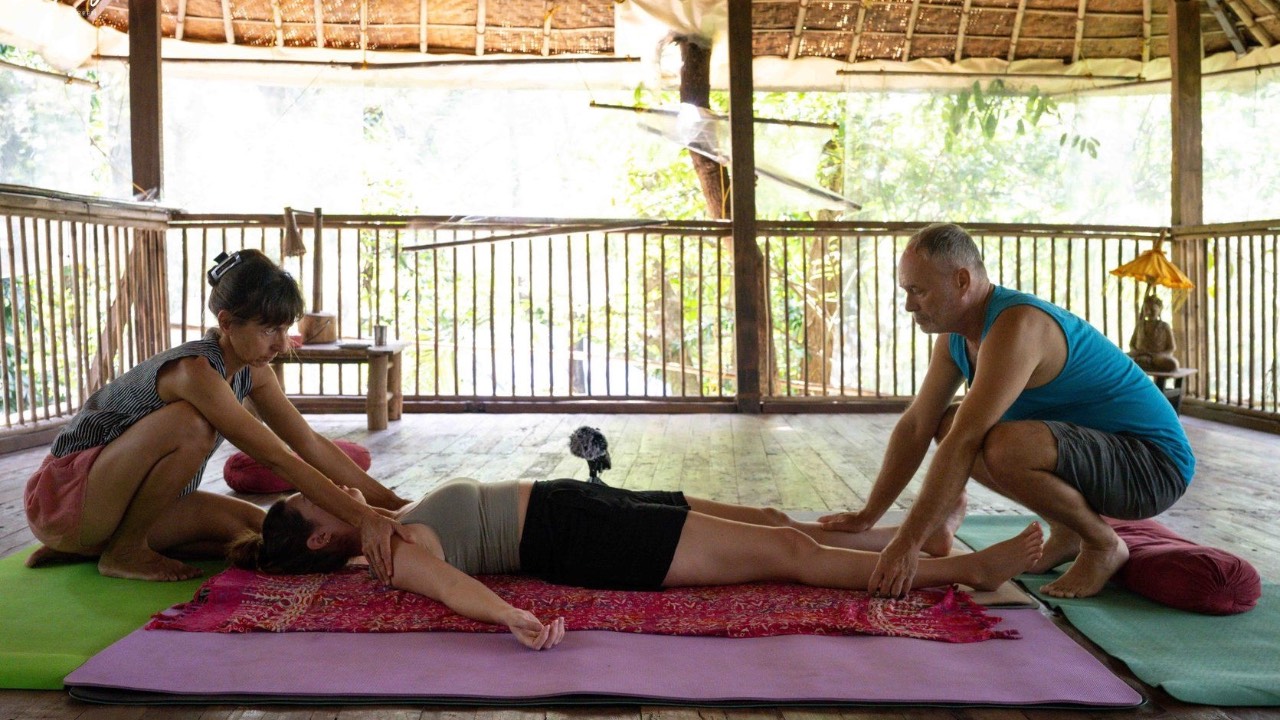
In every deep session, in our retreats or in everyday life, we notice: there is a point where you can't get any further on your own. The trauma wants something from outside.
It isn't enough to analyze yourself. The body – as the carrier of the pain – needs a contact that doesn't control but is present. Another nervous system. A person who doesn't look away.
"The trauma notices immediately whether you are afraid. It senses whether your intention is spaciousness or control."
And that is exactly why touch – in the deepest sense – is essential. It can bring a new experience into the system. An experience in which presence replaces what was once missing: safety, resonance, being truly seen.
Feeling is an art – and a practice
We cultivate feeling. We practice it like an art. And we don't just teach it – we live it ourselves.
Because feeling a feeling – whether pain, fear, anger or deep grief – is not the same as talking about it. It is not the same as "knowing it". It is a direct, physical, energetic process. And it is often unpredictable.
But: feelings have a wave form. They begin, they intensify, and – when we give them space – they dissolve.
🔬 A parallel from research:
Neurobiologically, emotions are active in the body for about 60–90 seconds if we don't suppress them or "hold on" to them (Jill Bolte Taylor). The prolonged duration comes from thinking about the emotion – not from the feeling itself.
Why nothingness is the key
Beyond the feeling waits what we call nothingness. A living emptiness. A space in which everything may arise – and dissolve again.
When we feel deeply enough, a moment comes when the "I" falls silent. When what we take to be "ourselves" expands. This is exactly where the deepest transformations often happen.
"Feelings are waves. And at the end of every wave waits nothingness – what we truly are."
In our retreats, people often experience that exactly this moment – the ending of the feeling, the letting go of the story – works more deeply than any method.
Relationship heals – not technique
Trauma can't simply be "massaged away". It needs relationship. Presence. Truthfulness. Courage. Both from the one who touches and from the one who allows themselves to be touched.
"If the person doesn't notice that something is letting go – nothing remains."
Only when the client (or you yourself) notices what is happening can the system integrate it. Otherwise it remains temporary relief – not real liberation.
The goal is not the feeling – but what comes after
Many people think: "I finally have to get rid of this feeling." But the goal is not the anger, the grief or the fear. The goal is what comes after.
What remains when a feeling has fully unfolded?
What remains when we no longer lose ourselves in the pain?
What remains when we finally feel safe?
Answer: Stillness. Spaciousness. Presence. Love. Life.
Conclusion: healing is possible – through feeling, relationship and presence
Trauma is not an end point. It is part of the path. And every pain that is truly touched brings you closer to yourself. Not to a better self – but to a freer being.
If you are ready to feel yourself, to explore, to let yourself be touched – and to touch – then a new path begins.
A path on which healing is not made, but allowed.
For your reflection:
- What tightness in your life might be connected to old pain?
- Where are you perhaps still waiting for someone else to touch you – instead of feeling yourself?
- What happens when you don't try to change a feeling, but simply stay with it?
If you'd like to dive deeper into this topic, join our Art of Deep Bodywork training & Emotional Therapeutic Coach training.
https://www.cominghome.ch/artofdeepbodywork
https://www.cominghome.ch/emotionaltherapeutic
We look forward to getting to know you.
Love,
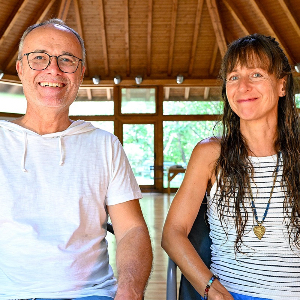
Pratibha & Kareem